

Reports & Analysis
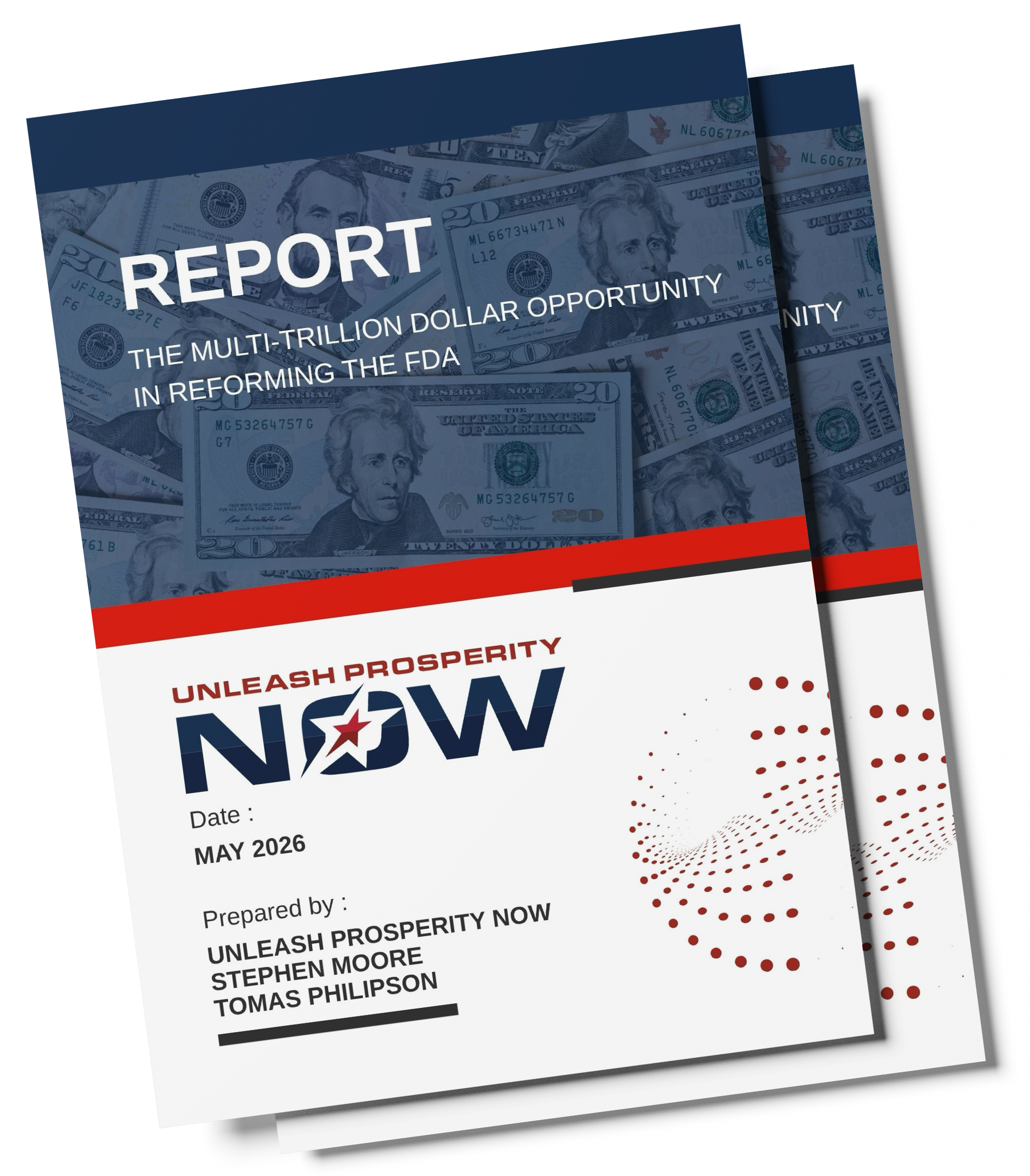
The Multi-Trillion Dollar Opportunity in Reforming the FDA

The Challenge
Before a new drug or device can reach patients, the FDA must certify it as both safe and effective — a process that can take a decade or more even after safety is established. That delay carries a real cost: patients who could benefit from a treatment go without it, and innovators lose years of return on their investment. Meanwhile, China has built a faster, cheaper regulatory pathway that's rapidly closing the gap with the U.S. in early-stage drug development.
What the Evidence Shows
Using a University of Chicago economic framework, the report estimates what faster FDA effectiveness reviews would actually be worth — and how far behind the U.S. is falling internationally.
$10.2T
Combined value to consumers and producers from accelerating FDA effectiveness determinations by just one year across small molecule drugs, biologics, and medical devices — rising to as much as $61.3 trillion undiscounted if delays were cut by six years.
$880M
Estimated mean cost of developing a new drug (2000–2018), rising to roughly $1.2 billion for oncology and ophthalmology drugs — with 90% of clinical drug development ultimately failing.
32%
China's share of early-stage (Phase 1) drug development programs in 2024, up from just 8% in 2015 — while the U.S. share fell from 48% to 37% over the same period.
The Real Question
Not whether the FDA should verify safety — that mandate isn't in question — but whether a years-long effectiveness review, layered on top of safety approval, is worth its cost in delayed patient access and lost innovation, especially as China's faster, cheaper system pulls ahead.
Bottom Line
The report's economic modeling suggests the value of shortening FDA effectiveness reviews is measured in trillions, not billions, and recommends a package of reforms — from expanded use of real-world evidence and AI-assisted review to a dedicated "Cancer Warp Speed Office" — aimed at closing the timeline gap with international competitors without weakening the FDA's safety mandate.
Sources: Philipson et al. (2026), "The Social Value of Faster FDA Approval," University of Chicago Initiative on Choice and Competition in Health Care; IQVIA Institute for Human Data Science, U.S. net transaction sales data, 2025; McKinsey & Company, "The Emerging Epicenter: Asia's Role in Biopharma's Future."